Difference and Disobedience: Inhabiting the Southern Anthropocene
Southern Anthropocenes [Ed. Casper Bruun Jensen] (2025).
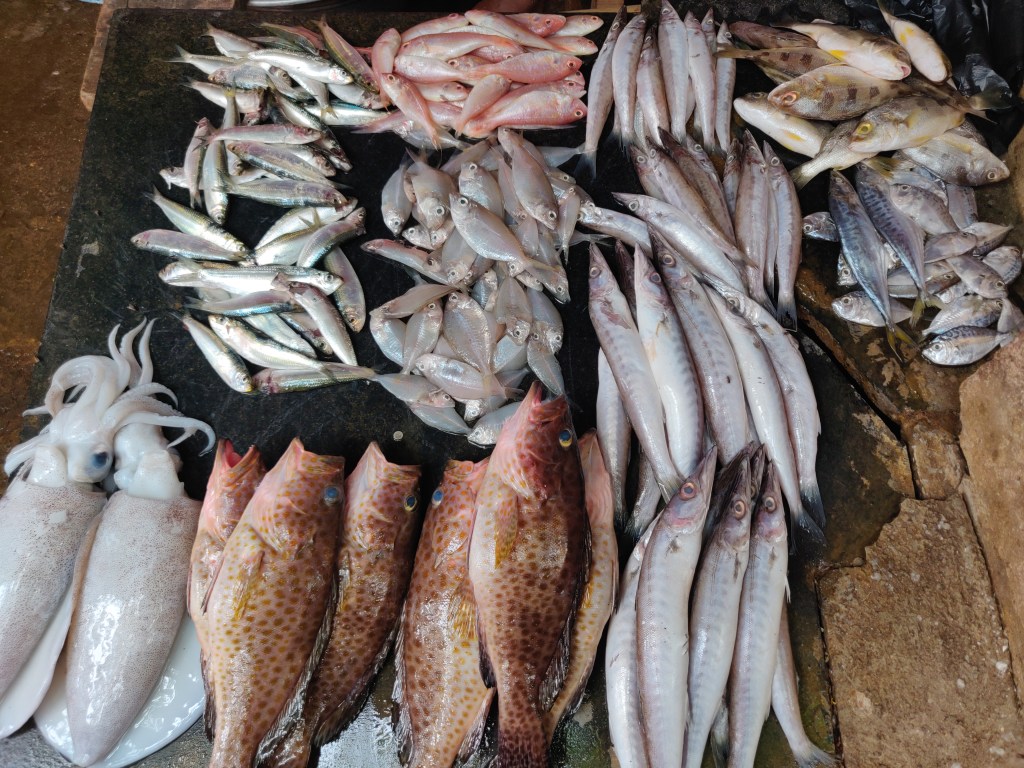
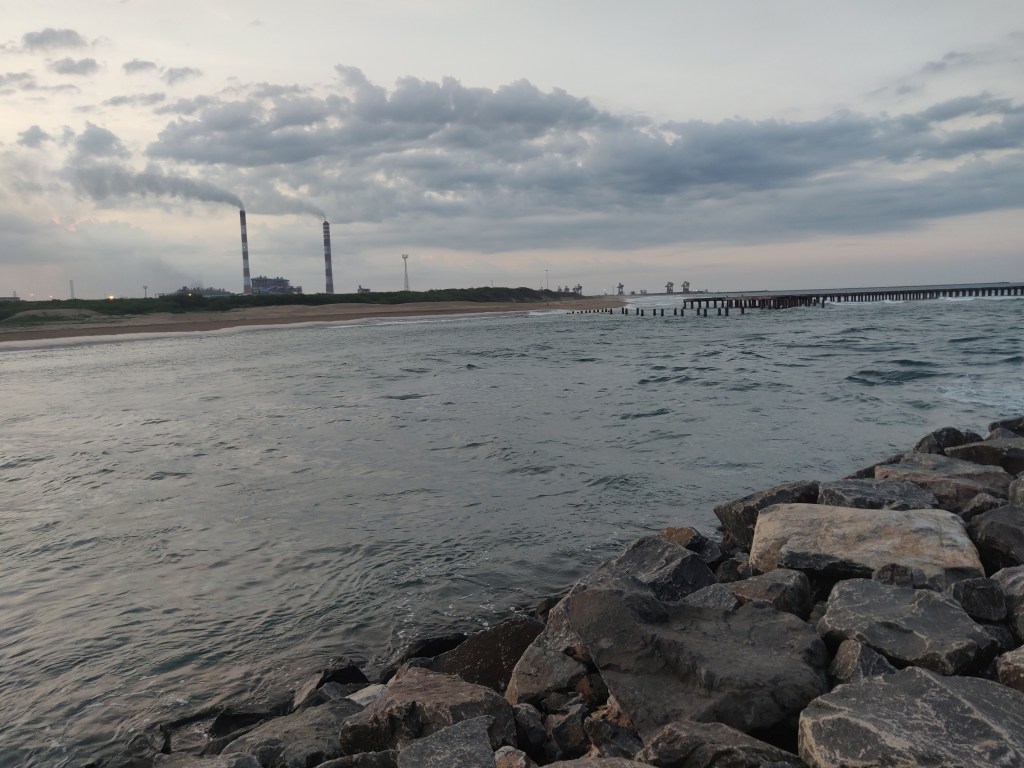
The north Chennai wetlands have, for a while, been poisoned by ostensible industrial development determined by structures of coloniality and caste. Yet, artisanal fishers inhabiting the waters prepare their nets and set out to fish every day on their fibre boats. This chapter proposes that this is an act of the ‘disobedient anthropos’ (de la Cadena, 2019). In its refusal to be absorbed into the economy of aspirational development, the disobedient fishing exposes the occupation of alter-worlds and lays claim to a particular multinatural world. Here it is not enough that there is a livelihood to be made and a planet to be inhabited, but that this inhabitation involves enjoying mud crabs and wild-caught prawns. By writing about this way of life, the chapter aims to trouble the idea of a singular Anthropocene, instead highlighting difference – amongst humans and non-humans – as key to the politics of inhabiting a Southern Anthropocene. [Read]
Ecologies of alterity: rethinking the coastal frontier
Urban Geography (2025).
The urban seashore is often seen as a natural frontier, its sands and seawater deemed an exceptional geography to be made productive through industrialization and urbanization. The coastline of Chennai tells this familiar story, the city’s fishers especially along its estuarine wetlands marginalized, in urbanization and even academic narratives. The everyday work of fishers, however, blurs boundaries between sea and land as they move between sand, rivers, mangroves and brackish waters, extending the city into the sea and the sea into the city in material ways. It challenges the presumed marginality of the ocean and coastal livelihood by straddling an urban-rural and sea-land continuum. This paper follows fishers’ practices of working on this land-sea continuum using a lens of agrarian and Indian frontier urbanism to unpack the production of this coastal frontier. It then draws on Rajyashree Reddy’s rethinking of the “urban” to propose that the ecology of Chennai’s wet coastline might offer ways of ascribing “radical alterity and radical undecidability” to the urban and might be rethought as a frontier of persistent challenge and renegotiation. [Read]
Inhabiting the extensions [with the Extensions Collective]
Dialogues in Human Geography (2025). 15(1) 5–27
Across the different vernaculars of the world’s urban majorities, there is renewed bewilderment as to what is going on in the cities in which they reside and frequently self-build. Prices are unaffordable and they are either pushed out or strongly lured away from central locations. Work is increasingly temporary, if available at all, and there is often just too much labour involved to keep lives viably in place. Not only do they look for affordability and new opportunities at increasingly distant suburbs and hinterlands, but for orientations, for ways of reading where things are heading, increasingly hedging their bets across multiple locations and affiliations. Coming together to write this piece from our own multiple orientations, we are eight researchers who, over the past year, joined to consider how variegated trajectories of expansion unsettle the current logics of city-making. We have used the notion of extensions as a way of thinking about operating in the middle of things, as both a reflection of and a way of dealing with this unsettling. An unsettling that disrupts clear designations of points of departure and arrival, of movement and settlement, of centre and periphery, of time and space. [Read]
Eat, play, protest: A life with prawns [transl. from Tamil original written by M Rajkamal]
Vittles Magazine. 18 Oct 2023.
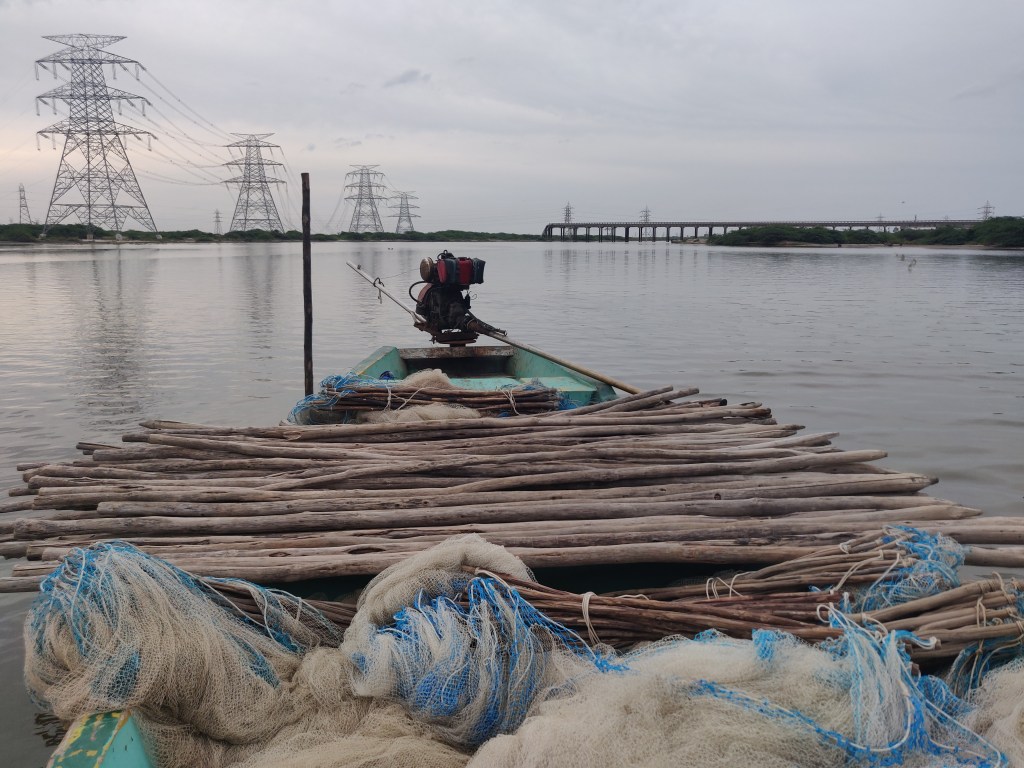
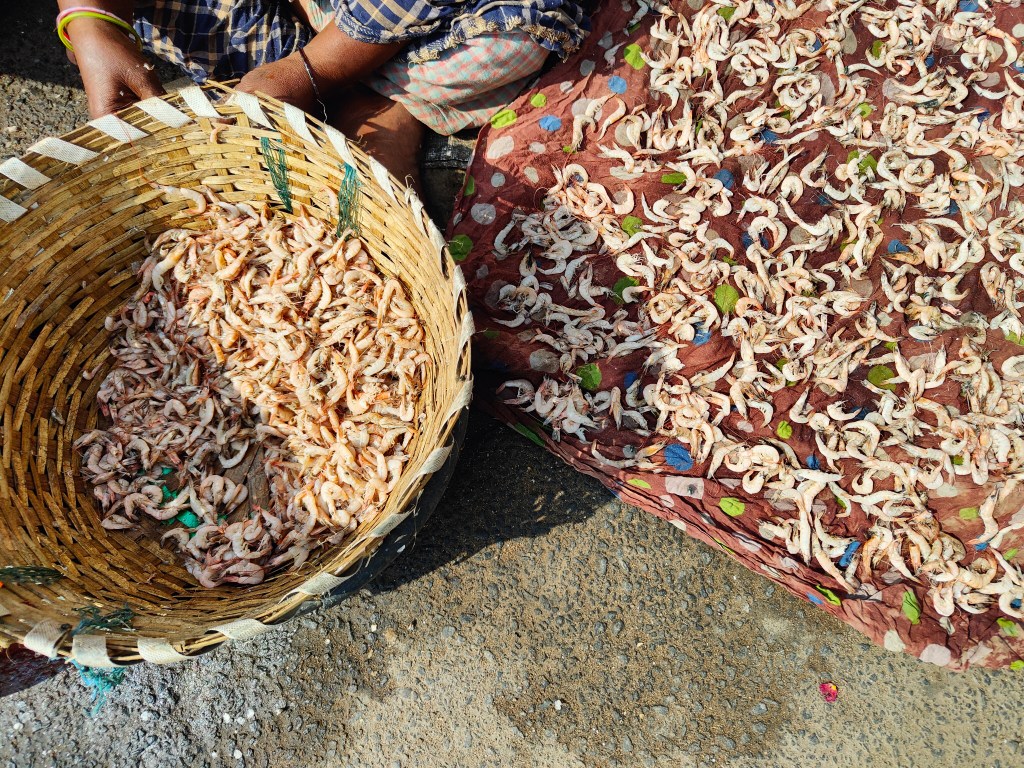
An essay on prawns and life in Pazhaverkadu, alongside looming coastal ‘development’ ; accompanied by a recipe for Bittersweet Prawns; written by M Rajkamal and also featured in Neidhal Kaiman/Seasoned by the Sea. [Read]
An experiment with the minor geographies of major cities: Infrastructural relations among the fragments
Urban Studies (2022). 59(8), 1556-1574
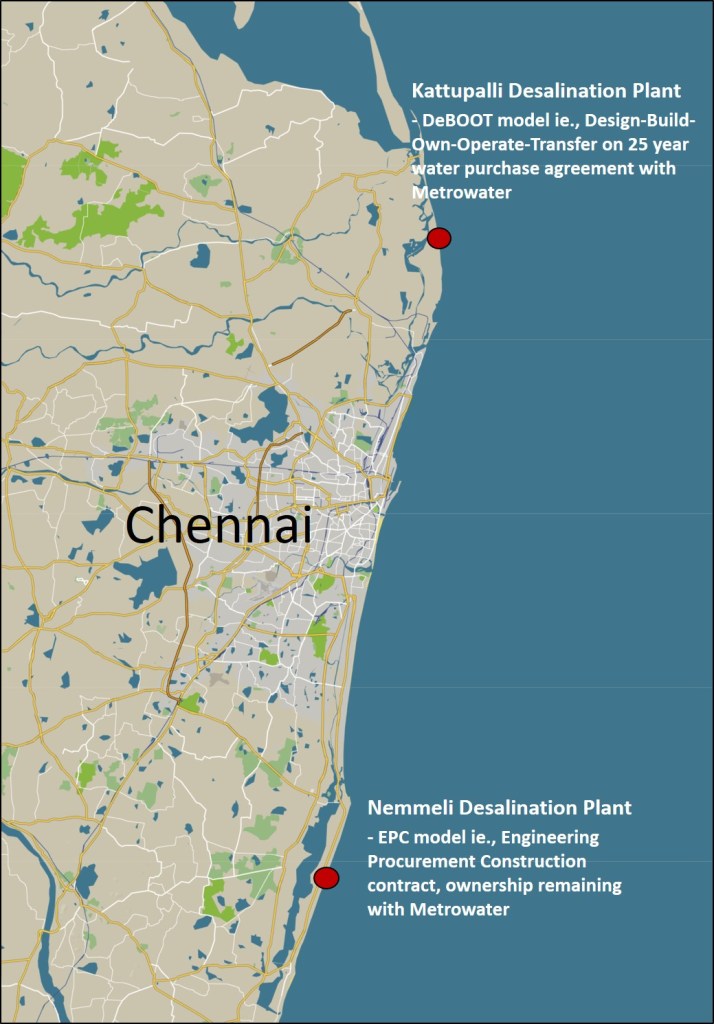
Research on urban water infrastructures has seldom reached across the Global North-South divide owing to their apparent developmental incommensurability. Yet, the universalising tendencies of urban theory has meant that cities of the Global South are often deemed to have ‘fragmented’ infrastructures or incomplete circulations in implicit comparison to the northern infrastructural ideal. So, in order to truly ‘world’ the study of infrastructures and cities, it is important to go beyond these dominant paradigms and attend to how infrastructures actually work and what socio-technical implications they have in cities of the Global South and North. Building on these provocations, this paper places the water infrastructures of two ‘most different cities’ – Chennai, India and London, UK – alongside each other in ‘experimental comparison’, where the aim is not to arrive at paradigmatic urban theory but to highlight heterogeneity and excavate themes for further critical thinking on each case. This paper will delineate the dialogic and reflexive method of research and analysis adopted, tracing how it led to the practice of ‘minor theory’, which focuses on processes that do not find expression in dominant universalising analyses. Here, minor theory is mobilised towards challenging dominant or major constructs about each city and across cities, while amplifying urban multiplicities and enabling a deeper engagement with infrastructure making in the Global South and North, thus expanding urban studies’ toolbox of critical thinking. [Read]
‘Do you drive a two-wheeler?’ Of risk and relatability while doing ethnographic fieldwork in Chennai
Field Research Methods Lab. LSE. 3 March 2021.
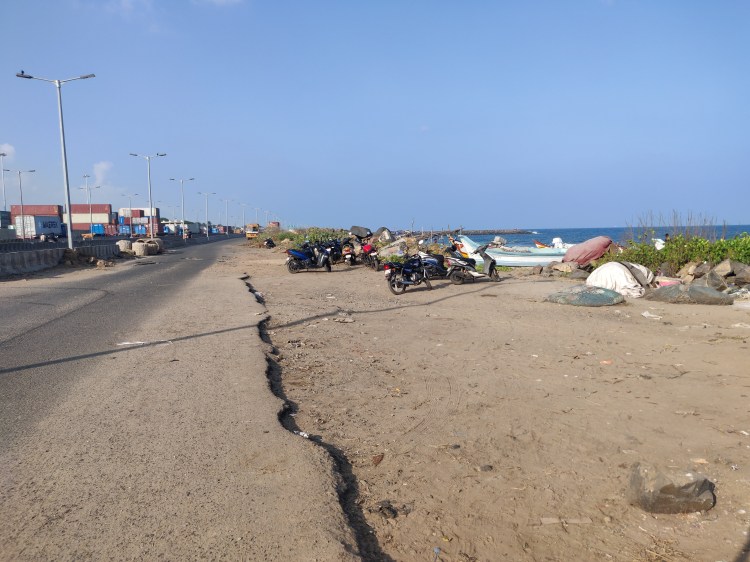
Two-wheelers ie., mopeds, scooters and motorbikes in south India are heavily encoded with notions of gender, caste and class which in turn determines the spaces they are expected to occupy and the social function they fulfil. A closer engagement with this particular form of mobility and a mild subversion of its codes can thus helpfully animate urban ethnography in the region including in navigating the researcher’s own positionality in the field. It can also lay bare the relations of alterity that constitute urban space. [Read]
Between Fragments & Ordering: engineering water infrastructures in a postcolonial city
Geoforum (2021). 119, 1-10
This paper explores the work of engineers amidst the fragments of access and use mechanisms that make up water infrastructures in the city of Chennai in south India. It sets its ethnographic investigation against a dual backdrop. One is that infrastructures in the global south have almost unequivocally come to be accepted as fragmented, even as the fragments themselves are little examined. The second is the mandate and will to order that engineering work is presumed to operate on by academic research and city managers alike. This paper brings these two provocations in juxtaposition by examining engineering work that occurs in the fragments of Chennai’s water infrastructures. In doing so, it argues that engineering modern infrastructures involves multiple, often fragmentary epistemologies that rarely fit into a singular overarching tendency, to order or otherwise. It draws attention to the distinct sub-disciplines as well as the layers of technical jobs and technological cultures constituting the profession of engineering. Tracing the social differentiation between some of these engineering pathways, the paper calls for a rethink of what counts as engineering for the purpose of infrastructure research; and how that shapes our visibility and understanding of cities and their socio-technical support structures. [Read]
Exploring Chennai, City of Fish
Whetstone Journal. 2 Oct 2020.
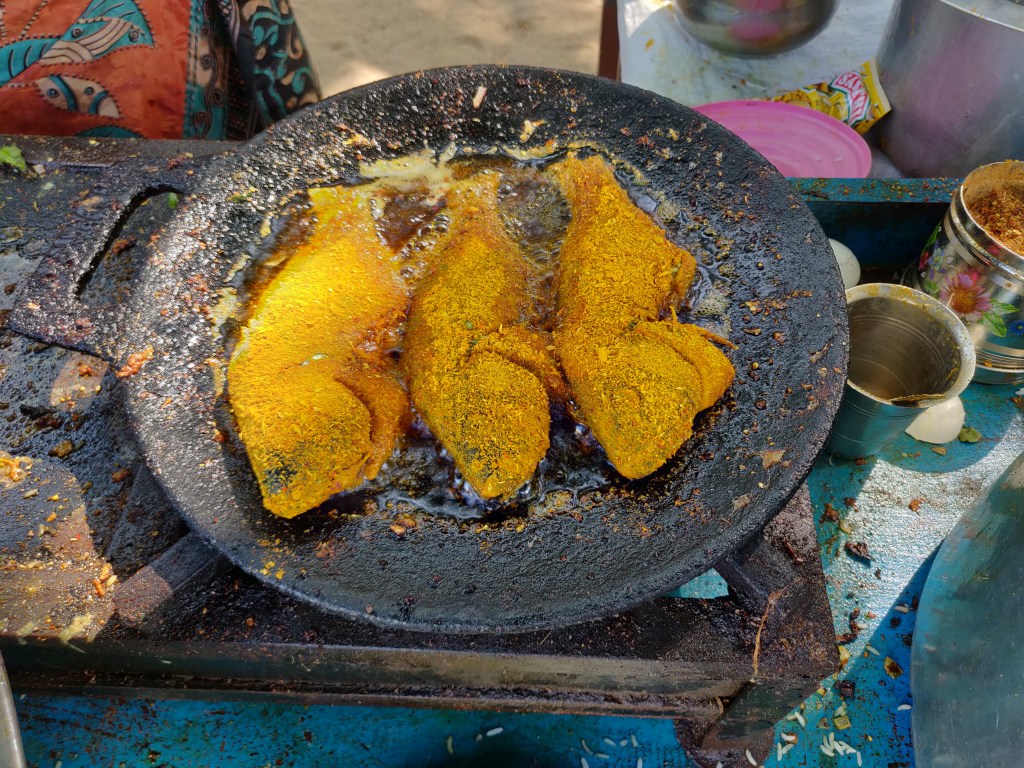
If there were only one food that Chennai is known for, it would have to be seafood. The liminal space between the busy city and the vast sea—whether in the city center, the industrial north or the affluent south—is home to communities of traditional fishers. Yet, popular imaginations of the city almost always center a dominant caste aesthetic, marginalising the life, work and foods of fishers in their own coastal home. [Read]
Distributed Labour: Socialising Infrastructures Through Engineering Work
Labouring Urban Infrastructures (digital magazine). June 2019
I attended the annual meeting of the Society of Public Health & Environmental Engineers (SoPHEE) in Chennai, India on World Water Day. The agenda for the meeting included talks by sustainability experts and scientists on the hydrology of Chennai. Arriving at the venue on a sweltering March evening, I was caught slightly offguard at what appeared to be more of a family style get-together. Kids and environmental experts were sharing a meal that eschewed water intensive rice for hardy millets. It is in this context that I find it useful to recast engineering practice as labour that straddles registers of expertise, material and affective work. To approach work in this uncompartmentalised way, I draw on the feminist anthropological pathways laid out by the ‘Gens’ framework, which urges attention to the ‘generative’ aspects of all kinds of work and the values extracted from them. [Read]
 kadarkarai